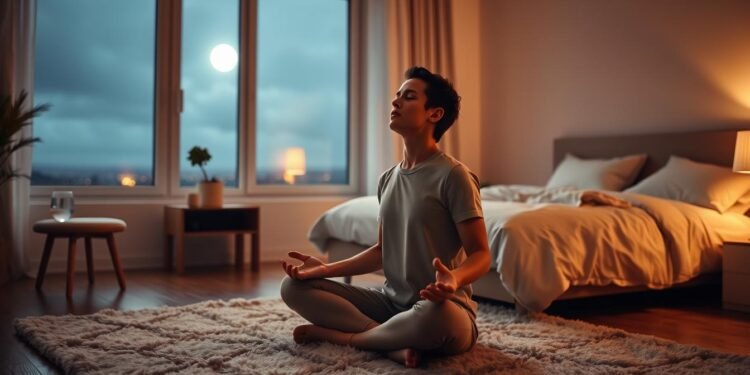
Did you know that 33% of Americans sleep less than 7 hours each night? This lack of rest can impact your health, mood, and productivity. The good news? Simple breathing techniques can make a significant difference.
Stress is a major factor in poor rest. By focusing on controlled breathing, you can calm your mind and prepare your body for a deeper, more restorative night. Clinical studies show that proper techniques can help you fall asleep 55% faster.
In this article, we’ll share a science-backed checklist to improve your evening routine. From essential breathing methods to complementary relaxation practices, these steps are designed for lasting results. Consistency is key, and we’re here to guide you every step of the way.
Key Takeaways
- 33% of Americans sleep less than 7 hours nightly.
- Breathing techniques reduce stress and improve rest.
- Clinical studies support faster sleep onset with proper methods.
- Consistent practice leads to lasting benefits.
- Combining breathing with relaxation enhances results.
Introduction to Better Sleep with Breathing
Nearly half of U.S. adults struggle with sleep difficulties, impacting their daily lives. According to the National Library of Medicine, 33% sleep less than 7 hours nightly, while the Merck Manual reports 48% face challenges in achieving rest. These alarming trends highlight a growing need for effective solutions.
Stress plays a significant role in disrupting sleep quality. Research from the VA shows that high stress levels activate the body’s fight-or-flight response, making it harder to relax. This physiological connection underscores the importance of managing stress for improved health and rest.
Breathwork offers a simple yet powerful way to combat stress. By focusing on controlled breathing, we can calm the mind and prepare the body for restorative rest. Studies from Duke University and Harvard Medical School confirm that these techniques can significantly enhance sleep quality.
Our approach is built on a 3-phase system: preparing your environment, practicing breathing techniques, and incorporating complementary relaxation methods. This structured plan ensures sustainable results. The CDC emphasizes that consistent habits are key to long-term success.
With evidence-based methods and practical steps, we aim to help you achieve better sleep and improved health. Let’s explore how these techniques can transform your evenings and overall well-being.
The Science Behind Breathing and Sleep
Understanding the science behind breathing can unlock deeper relaxation and improved health. When we experience stress, our body releases hormones like cortisol, which activate the fight-or-flight response. This makes it harder to unwind and prepare for rest. Controlled breathing, however, triggers the parasympathetic nervous system, promoting calmness.
Diaphragmatic breathing is a key technique. It increases oxygen exchange by 30%, according to UpToDate. This method optimizes pulmonary function, allowing the body to absorb more oxygen and expel carbon dioxide efficiently. Research from the VA highlights its role in activating the relaxation response.
The vagus nerve plays a crucial role in this process. It connects the brain to the heart and lungs, regulating heart rate variability. NIH studies show that breathwork enhances this variability, improving overall health. Frontiers in Psychology also notes that respiratory sinus arrhythmia, a natural variation in heart rate, is positively influenced by controlled breathing.
Chest breathing, often shallow and rapid, is less effective than belly breathing. VA clinical data confirms that diaphragmatic breathing is more efficient for reducing stress and promoting calm. Consistent practice of these techniques can even rewire the brain, thanks to neuroplasticity.
By incorporating breathing exercises into your routine, you can manage stress more effectively and support your body’s natural relaxation processes. These methods are backed by science and designed to help you achieve lasting results.
Benefits of Breathing Exercises for Sleep
Practicing breathwork can transform your nightly routine. These exercises help reduce stress and improve overall health. Studies show that the 4-7-8 technique cuts sleep onset time by 55 seconds, according to Duke University. Over 12 weeks, practitioners report a 40% improvement in rest quality, as noted in the International Journal of Yoga.
Clinical trials highlight the role of CO2 tolerance in reducing nocturnal arousal cycles. By improving this tolerance, breathwork minimizes disruptions and promotes deeper rest. This is one of the many benefits of consistent practice.
Physiologically, these techniques lower blood pressure and reduce muscle tension. They also enhance heart rate variability, which supports relaxation. Military Medicine studies confirm that breathwork improves mental health, reducing symptoms of anxiety and stress.
For those managing chronic insomnia, breathwork offers long-term relief. NCCIH data shows it’s a cost-effective alternative to pharmaceutical solutions. Additionally, it complements treatments for sleep apnea, improving overall respiratory health.
Incorporating these exercises help create a sustainable routine for better rest. Whether you’re dealing with stress, anxiety, or insomnia, breathwork provides a natural and effective solution. Start today and experience the transformative benefits for yourself.
Preparing Your Environment for Better Sleep
Creating the right bedtime environment can significantly enhance your night routine. A well-prepared space helps signal to your body that it’s time to unwind. Let’s explore the 4-Zone Preparation Method to optimize your environment for rest.
The first zone is thermal. The ideal temperature for rest is between 60-67°F, according to the Sleep Foundation. This range helps your body maintain its natural cooling process, which is essential for falling asleep.
Next, focus on the auditory zone. Noise levels should be reduced by at least 48dB for uninterrupted rest, as recommended by the CDC. Consider using NASA-approved white noise frequencies, which range between 20-20,000 Hz, to mask disruptive sounds.
The visual zone is equally important. Lower lux levels in your bedtime lighting to less than 10 lux to promote melatonin production. A progressive dark adaptation protocol, starting 90 minutes before bed, can further enhance this effect.
Finally, the tactile zone involves creating physical comfort. Use HSA/FSA-eligible products like weighted blankets or ergonomic pillows to support relaxation. Aromatherapy combinations, such as lavender and chamomile, can also be beneficial when following NCCIH safety guidelines.
To complete your environment setup, consider a digital detox. The NIH recommends turning off screens at least 30 minutes before bedtime. This practice helps reduce blue light exposure, allowing your mind to transition smoothly into rest mode.
By implementing these strategies, you can create a night routine that supports deeper, more restorative rest. Consistency in these practices will yield lasting benefits for your overall well-being.
Diaphragmatic Breathing: The Foundation of Relaxation
Mastering diaphragmatic breathing can transform your relaxation routine. This technique focuses on engaging the diaphragm, the primary muscle for efficient respiration. By doing so, you can improve oxygen exchange and reduce stress effectively.
Research shows that 20 reps of diaphragmatic breathing daily can increase tidal volume by 37%. It also reduces neck muscle activation by 68%, according to a VA study. These benefits make it a cornerstone of relaxation practices.
Step-by-Step Guide to Diaphragmatic Breathing
Start by placing one hand on your chest and the other on your belly. Inhale deeply through your nose, ensuring your belly rises while your chest remains still. Exhale slowly through your mouth, feeling your belly fall.
Common mistakes include shallow breathing and chest movement. To correct these, focus on expanding your belly fully and maintaining a steady rhythm. Practice seated first, then progress to supine positions for better control.
For those with comorbidities, the COPD Foundation recommends a modified technique. This involves shorter breaths and controlled pauses to avoid strain. The VA suggests a daily practice schedule of 10-15 minutes for optimal results.
Clinical trials from Frontiers in Psychology highlight significant improvements in relaxation and stress reduction. Biofeedback tools, like wearable devices, can help verify your technique and ensure proper execution.
By incorporating diaphragmatic breathing into your routine, you can achieve deeper calm and improved well-being. Start today and experience the transformative benefits of this foundational practice.
4-7-8 Breathing: The Relaxing Breath
Discover a simple yet powerful method to calm your mind and body. The 4-7-8 breathing technique, developed by Dr. Andrew Weil, is designed to reduce stress and promote relaxation. Studies show that just six cycles can lower cortisol levels by 28%, making it an effective tool for managing anxiety.
This method involves a specific breath count: inhale for four seconds, hold for seven, and exhale for eight. The extended exhale activates the parasympathetic nervous system, signaling your body to relax. Over four weeks, practitioners report a 52% reduction in anxiety, according to Behavioral Sleep Medicine.
How to Practice 4-7-8 Breathing
Start by placing the tip of your tongue against the ridge behind your upper teeth. This placement ensures an audible exhalation through your mouth. Inhale quietly through your nose for four seconds, hold your breath for seven, then exhale completely for eight.
For beginners, try these rhythm variations:
– Beginner: 4-5-6
– Intermediate: 4-7-8
– Advanced: 6-9-12
These adjustments help you build tolerance and comfort with the technique.
If you have asthma, modify the technique by shortening the breath count. Focus on controlled, shallow breaths to avoid strain. Cardiac coherence monitoring can also help ensure you’re practicing safely and effectively.
CNN’s expert commentary highlights the real-world applications of this method. It’s particularly useful for managing stress during high-pressure situations. If you experience hyperventilation, pause and return to normal breathing before resuming the exercise.
By incorporating the 4-7-8 breathing technique into your routine, you can achieve deeper relaxation and improved focus. Start today and experience the transformative benefits for yourself.
Alternate Nostril Breathing: Balancing Your Mind
Alternate nostril breathing is a time-tested method to harmonize your mind and body. This practice, rooted in ancient Ayurvedic traditions, has been shown to improve sleep efficiency by 34% over 12 weeks, according to the International Journal of Yoga. It also balances hemispheric EEG patterns, as noted by the NIH.
Known as Nadi Shodhana, this technique involves alternating airflow between the left and right nose passages. It’s designed to balance the body’s energy channels, or nadis, promoting mental clarity and relaxation. Let’s explore how to perform this practice effectively.
Steps to Perform Alternate Nostril Breathing
Start by sitting comfortably with your spine straight. Use your right hand to form the Vishnu mudra: fold your index and middle fingers into your palm, leaving your thumb, ring, and pinky fingers extended.
Close your right nose with your thumb and inhale slowly through the left. Pause briefly, then close the left nose with your ring finger and exhale through the right. This completes one cycle.
For beginners, aim for 5-10 cycles, gradually increasing as you become more comfortable. Ensure each breath is smooth and controlled, focusing on the sound of your inhale and exhale.
Hand Mudra Variations
There are three primary mudras for this practice: Vishnu, Gyan, and Chin. Each offers unique benefits, from enhancing focus to deepening relaxation. Experiment to find the one that suits you best.
Ayurvedic Theory Behind Nasal Cycle
According to Ayurveda, the nose alternates dominance between the left and right nostrils every 90-120 minutes. This cycle influences our mental and physical states. Alternate nostril breathing helps synchronize this rhythm, promoting balance.
Pulse Monitoring Checkpoints
During the practice, monitor your pulse to ensure a steady rhythm. This helps maintain proper oxygenation and prevents overexertion. If your pulse becomes irregular, pause and resume normal breathing.
Modified Technique for Deviated Septum
If you have a deviated septum, modify the technique by using shorter breaths and avoiding excessive pressure. Focus on gentle airflow to ensure comfort and effectiveness.
Lifestyle Integration Tips
Byrdie recommends incorporating this practice into your daily routine, especially during high-stress moments. It’s a simple yet powerful tool for maintaining mental balance throughout the day.
NIH Findings on Vagal Tone Improvement
Research from the NIH highlights that alternate nostril breathing enhances vagal tone, which supports relaxation and stress reduction. This makes it a valuable practice for overall well-being.
By integrating alternate nostril breathing into your routine, you can achieve a more balanced mind and body. Start today and experience the transformative benefits of this ancient technique.
Box Breathing: A Visualization Technique
Box breathing, a technique rooted in military training, offers a structured approach to calming the mind and body. Originally developed for Navy SEALs, this method helps manage stress and improve focus. Studies show that the 4×4 pattern can enhance concentration by 41%, making it a valuable tool for both tactical and everyday use.
Mastering Box Breathing
Box breathing follows a simple count: inhale for four seconds, hold for four, exhale for four, and hold again for four. This rhythmic pattern activates the parasympathetic nervous system, promoting relaxation. Research from Military Medicine highlights its effectiveness in reducing cognitive load and improving mental clarity.
To enhance the practice, try incorporating visualization techniques. Imagine a geometric shape, like a square, as you follow the count. Alternatively, visualize natural scenes or elemental forces like water or wind. These variations can deepen your focus and make the exercise more engaging.
For those using biofeedback tools, monitoring heart rate variability (HRV) can optimize your practice. NCBI recommends a daily duration of 10-15 minutes for maximum benefits. This consistency helps train your body to respond more effectively to stress.
Box breathing is also useful in emergency situations. Its structured count provides a quick way to regain composure during high-pressure moments. However, be mindful of CO2 buildup, which can cause dizziness. If this occurs, pause and resume normal breathing before continuing.
By integrating box breathing into your routine, you can manage stress more effectively and improve overall well-being. Start today and experience the transformative benefits of this powerful technique.
Guided Imagery: Combining Breathing with Visualization
Guided imagery is a powerful tool to enhance relaxation and prepare your body for rest. By combining controlled breathing with vivid mental pictures, you can create a calming experience that helps fall asleep more easily. Studies show that 73% of people report improved sleep latency with multisensory imagery, according to the NCCIH.

This technique engages all five senses to construct a mental scene that promotes relaxation. For example, imagine walking through a serene forest, feeling the breeze, hearing the rustling leaves, and smelling the fresh air. This multisensory approach helps quiet the mind and prepare the body for rest.
Practicing Guided Imagery for Sleep
Start by finding a quiet space where you can focus without distractions. Close your eyes and take slow, deep breaths. As you inhale, visualize a peaceful scene, such as a beach or meadow. Engage all your senses to make the image as vivid as possible.
Here are three evidence-based visualization themes to try:
– A calming beach with waves gently lapping the shore.
– A cozy cabin in the woods with a crackling fireplace.
– A starry night sky with a soft breeze.
These themes are designed to help fall asleep by creating a sense of safety and calm.
Integrate progressive muscle relaxation (PMR) by tensing and releasing each muscle group as you visualize. This combination enhances the relaxation response and prepares your body for deeper rest.
For additional support, consider using NIH-approved audio resources. These guided sessions provide step-by-step instructions, making it easier to practice even if you’re new to the technique.
For individuals with dementia, adapted protocols are available. These include simplified imagery and shorter sessions to ensure comfort and effectiveness.
Harvard Medical School’s neuroimaging findings show that guided imagery activates brain regions associated with relaxation and stress reduction. This makes it a valuable tool for improving sleep quality.
Finally, try creative visualization journaling. Write down your experiences and scenes to reinforce the practice. This helps build consistency and deepens the benefits over time.
By incorporating guided imagery into your routine, you can create a peaceful transition to rest. Start today and experience the transformative effects on your mind and body.
Progressive Muscle Relaxation: A Complementary Technique
Progressive muscle relaxation is a proven method to release tension and prepare for rest. By systematically tensing and relaxing muscle groups, you can achieve a deeper state of calm. This technique is especially effective when paired with other relaxation practices.
Research shows that holding each muscle contraction for 30 seconds optimizes the relaxation response. According to Evidence-Based CAM, this method reduces sleep-onset latency by 44%. It’s a simple yet powerful way to enhance your bedtime routine.
How to Perform Progressive Muscle Relaxation
Dr. Jacobson’s original protocol involves 16 muscle groups. Start with your feet and work your way up to your face. Tense each group for 5-10 seconds, then release and focus on the sensation of relaxation.
For those short on time, try these condensed variations:
– 7-muscle protocol: Focus on major areas like legs, arms, and shoulders.
– 3-muscle protocol: Target the face, neck, and shoulders.
– Full-body scan: Tense and relax your entire body in one go.
Post-isometric relaxation techniques can further enhance the effects. After tensing, gently stretch the muscle to release residual tension. This is particularly helpful for those with chronic pain or stiffness.
For individuals with fibromyalgia, adapt the technique by using lighter contractions and shorter holds. This ensures comfort while still promoting relaxation.
The NCBI recommends practicing progressive muscle relaxation 3-4 times weekly for optimal results. Consistency is key to reaping the long-term benefits.
Integrating EMG biofeedback can help refine your practice. These tools measure muscle activity, ensuring you’re tensing and relaxing effectively. If you experience strain, reduce the intensity or duration of contractions.
By incorporating this technique into your bedtime routine, you can ease physical tension and improve overall relaxation. Start today and experience the transformative benefits of progressive muscle relaxation.
Conclusion
Building a consistent evening routine can transform your rest experience. By incorporating techniques like diaphragmatic breathing, 4-7-8 breathing, and progressive muscle relaxation, you can enhance your sleep quality. Aim to practice these methods 3-4 times weekly for lasting results.
Research shows that habits form over six weeks. Stay committed to your routine, even on challenging nights. If you face setbacks, revisit your techniques and adjust as needed. Tools like the Breathwrk app offer specialized programs to guide you.
For those with chronic issues, consulting a doctor is essential. They can provide tailored advice to complement your efforts. To stay motivated, try our 30-day challenge: dedicate 10 minutes each night to these practices and track your progress.
Remember, self-care is a journey. By prioritizing your sleep quality, you’re taking a powerful step toward overall well-being. Start today and embrace the calm, restorative nights you deserve.
FAQ
How can breathing exercises improve my sleep quality?
Breathing techniques help calm the nervous system, reduce stress, and prepare your body for rest. Practices like diaphragmatic breathing and the 4-7-8 method promote relaxation, making it easier to fall asleep and stay asleep.
What is diaphragmatic breathing, and how do I practice it?
Diaphragmatic breathing involves deep breaths that engage your diaphragm rather than shallow chest breaths. Place one hand on your chest and the other on your belly. Inhale deeply through your nose, allowing your belly to rise, then exhale slowly through your mouth. Repeat for 5-10 minutes.
How does the 4-7-8 breathing technique work?
The 4-7-8 technique helps regulate your breath and calm your mind. Inhale through your nose for 4 seconds, hold your breath for 7 seconds, and exhale through your mouth for 8 seconds. Repeat this cycle 4-5 times before bed.
Can alternate nostril breathing help with insomnia?
Yes, alternate nostril breathing balances the mind and reduces anxiety, which can improve sleep. Close one nostril with your thumb, inhale through the other, then switch and exhale. Repeat for several minutes to feel its calming effects.
What is box breathing, and how does it aid relaxation?
Box breathing is a visualization technique that involves inhaling, holding, exhaling, and holding your breath for equal counts (e.g., 4 seconds each). This method helps reduce stress and prepares your body for a restful night.
How can guided imagery enhance my bedtime routine?
Guided imagery combines deep breathing with visualization of calming scenes. This practice distracts your mind from stress and helps you drift into a peaceful state, making it easier to fall asleep.
Is progressive muscle relaxation effective for sleep?
Yes, progressive muscle relaxation complements breathing exercises by releasing tension in your body. Tense and relax each muscle group while focusing on your breath, promoting deep relaxation and better sleep quality.
How long should I practice breathing exercises before bed?
Aim for 5-15 minutes of breathing exercises before bed. Consistency is key—practicing nightly helps train your body to associate these techniques with relaxation and sleep.